logo
Discover our complete solutions portfolio covering Cathodic Protection and Corrosion management - PCB design and plating - Functional and decorative plating - Electrocoating - Acoustics
Discover
Protect
Elsyca V-PIMS
A revolution in digital PIMS combining Pipeline Corrosion Integrity Management System (PIMS) and computational modeling capabilities

AC & CP Bundle
Model your pipeline network once, then assess AC interference and cathodic protection from the same GIS model. Model Composer builds it, IRIS solves the AC, CatPro solves the DC — no rebuild, no re-entry, one source of truth.

Elsyca IRIS
Deep analysis of AC threats supporting efficient mitigation systems computer-aided design
Elsyca CatPro
Graphical simulation platform for cathodic protection and DC stray current analysis of pipeline networks
Elsyca CPManager
3D CAD-based software simulation platform for the computer-aided design and analysis of cathodic protection installations

Elsyca ACTA
Unique solution offering accurate, disambiguated, and tailored risk ranking report of pipeline networks
Plate

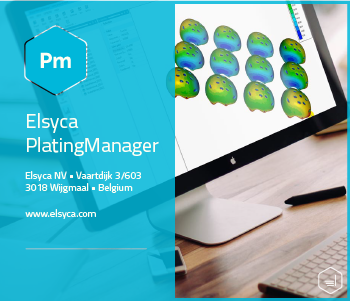
Elsyca PlatingManager
Leverage a digital twin of your plating line to predict plating performance and increase manufacturing capacity

Elsyca PCBBalance
The world’s only PCB DFM software that applies automated and optimized copper balancing to your PCB design and panel layout.

Elsyca PCBPlate
State-of-the-art graphical simulation platform for enhancing the plating performance of your PCB panel and pattern plating processes.
Elsyca ECoatMaster
CAD independent software platform for the simulation of the automotive electrocoating process of a body-in-white (BIW).

Elsyca EPOS
Simulate the performances of electropolishing processes based on a virtual mock-up of the electropolishing cell.
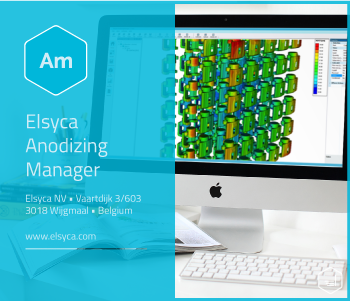
Elsyca AnodizingManager
State-of-the-art graphical simulation platform for analyzing the production performance and quality of anodizing processes.
Innovate

Elsyca CorrosionMaster
CorrosionMaster identifies corrosion hot spots and predicts corrosion rates, enabling engineers to look at alternative material combinations and/or coating systems, or investigate corrosion-mitigating measures.
Elsyca LeakageMaster
Improve vehicles interior acoustic comfort by performing upfront virtual smoke tests.
Elsyca XPlorer
Interactive simulation results viewer for Finite Elements results
Elsyca XPlorer3D
Analyze, Understand and Get Immersed in your results
Watchmaking and luxury habillage

See the distribution before the part enters the tank.

What simulation puts on the screen

The whole rack, before you plate it

The distribution is not random and it is not a chemistry problem. It follows the electric field in the tank: how the part sits, what sits next to it, how far it is from the anodes, and what the part's own shape does to the current arriving at its surface.

It is computable. And once it is computable, it is designable — rack pitch and orientation, hanging point, shielding, auxiliary anodes, or feedback to the designer while the case is still a CAD model and changing it is free.

Four things every habillage shop knows, and one thing nobody can see

Anyone who plates watch cases, bracelets, bezels or clasps knows the failure modes by heart. What no one can see, before the rack comes out of the bath, is where on that rack the problem is going to appear — and by how much.

Position on the rack changes everything

Two identical cases, same bath, same cycle, same chemistry. One hangs at the edge of the rack and one hangs in the middle. They do not come out with the same deposit. The specification is written for a part; the process runs on a rack.

Precious metal goes where it isn't needed

To guarantee a minimum thickness on the least favoured part, you plate everything longer. On gold, rhodium and palladium layers, that margin is not a process detail — it is the cost structure of the line.

The geometry works against you

Openwork and skeleton designs, interlocking bracelet links, recesses under lugs and horns, sharp edges beside broad polished flanks. Current concentrates on edges and tips and starves anything recessed or shadowed. The more the design is worth, the worse the geometry usually is.

You find out at the very end

A cosmetic reject or a thickness non-conformity surfaces at final inspection or at the customer's incoming control — when the part already carries its full material, machining, polishing and finishing value.

Two very different conversations

Case makers and habillage subcontractors

You plate to someone else's drawing, you carry the scrap, and you win work on demonstrated technical capability.

Simulation is used here to qualify a new reference without burning parts, to justify a rack or tooling change with something more than experience, and to answer a client's thickness question with a distribution instead of an assurance. It is also, increasingly, a way to show a brand's engineering team that you control your process rather than run it.

Galvanic departments inside a manufacture

You own the process for parts your own company designs, and the expensive failures happen at the interface between design and plating.

Simulation is used here earlier: to give plating feedback on a case or bracelet while the geometry is still open, to standardise how a new reference is introduced onto an existing line, and to make process knowledge survive the retirement of the people who hold it.

Send us one difficult part

The fastest way to see whether this is useful is a reference you already know is awkward — an openwork bracelet, a case with deep recesses under the horns, a part where you have always known the corners of the rack behave differently and have never had a reason to quantify it.

Send the geometry and how you currently hang it. We will show you the distribution and where it comes from.